
St. LouisBird Removal& Control
Chirping inside the bathroom vent. Nests packed into the soffits. Droppings streaking the siding — or your storefront. Birds don’t read as pests until they’ve moved into the structure, and then the damage, the smell, and the mess add up fast. Most birds are also federally protected, so removal has to be done right. Locally owned, backed by 35+ years of hands-on wildlife experience in St. Louis. We remove nests lawfully and humanely, clean up, and exclude so the vents don’t refill next spring. One call sets up a free on-site inspection.
Book a Free Inspection
Bird trapped inside right now? Calling is fastest — phones answered 24/7. Otherwise pick a time and we’ll confirm within an hour during business hours.
Lovely in the tree.Trouble in the vent.
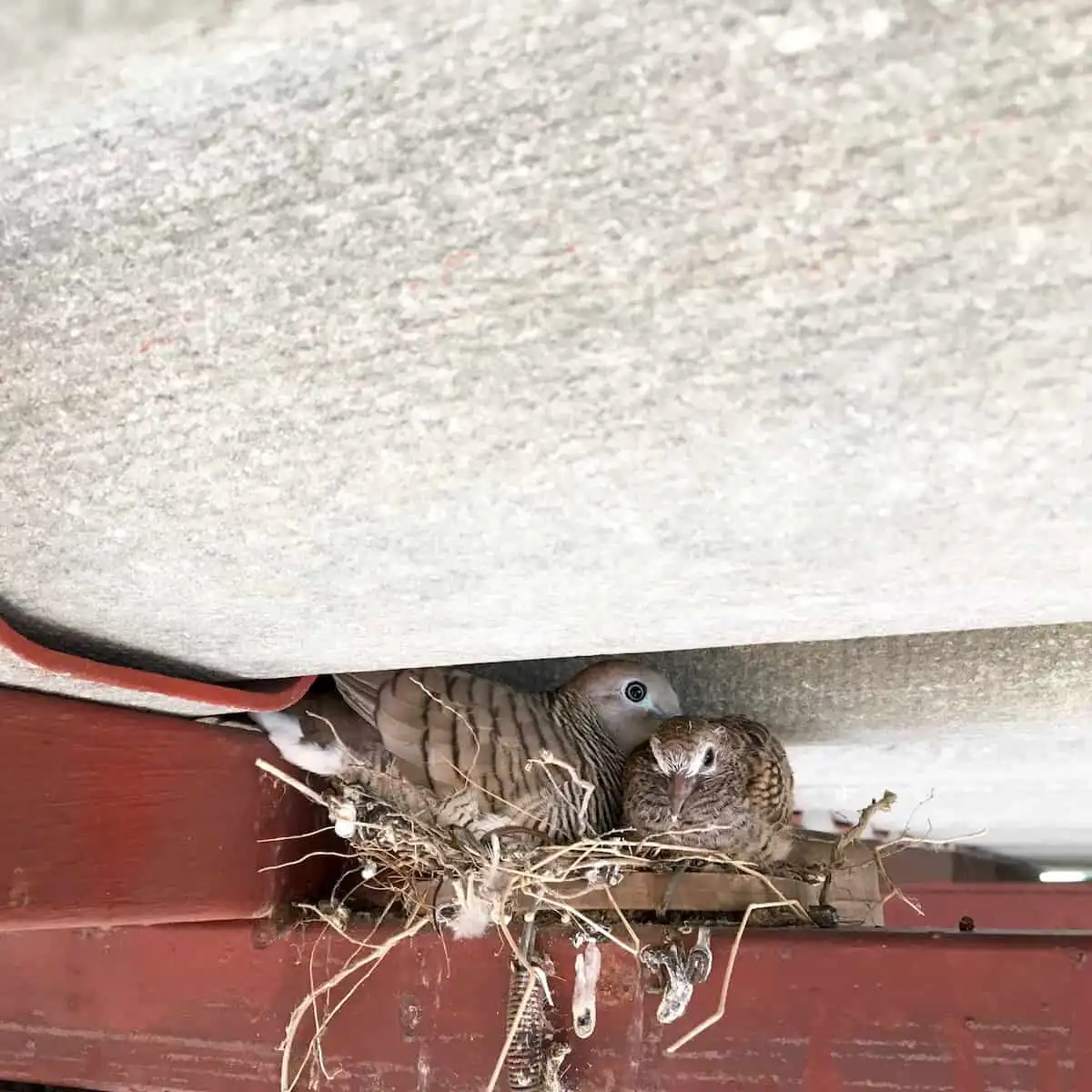
Most birds nest in trees and never bother anyone. The trouble comes from a short list of structure-lovers — in St. Louis that’s mostly European starlings, house sparrows, and pigeons, with woodpeckers, grackles, and the occasional goose or vulture rounding out the complaints. Nests in vents and gutters block airflow and drainage (a nest in a dryer vent is a real fire hazard), accumulated droppings are acidic enough to eat paint and masonry and can carry histoplasmosis and other pathogens, and bird nests host mites and other parasites that migrate indoors when the chicks leave. One legal wrinkle makes this different from other wildlife: most native birds, their nests, and their eggs are federally protected under the Migratory Bird Treaty Act — so which species you have determines what can lawfully be done, and when. Here’s what tells you birds have moved from the tree to the building.
Dropping Buildup
Accumulating droppings on ledges, rooflines, siding, walkways, or parked cars — always heaviest directly below the roost. Acidic enough to damage finishes, slippery on pavement, and not something to pressure-wash dry (that’s how spores go airborne).
Nests in Vents & Gutters
Twigs and straw poking out of bathroom, kitchen, or dryer vents, packed into gutters, or tucked on ledges and beams. Blocked vents mean moisture problems at best and a lint-fire risk at worst; blocked gutters mean water damage.
Chirping in the Walls
Persistent chirping from a vent, soffit, or wall cavity — loudest in spring when chicks hatch. If you can hear the nest, it’s inside the structure, and the parasites in it are one thin barrier from your living space.
Structural Damage
Pecked or torn siding and trim (woodpeckers), displaced roof tiles, stained fascia, and soffit gaps widened by repeated traffic. Small damage that grows every season the roost stays active.
The Daily Flock
The same birds settling on the same roofline, ledge, or wire every day at the same times. Birds are habitual — an established roost keeps growing until the site stops being available.
A persistent bad smell with no obvious source, or a sudden mite or flea problem indoors, often traces back to a hidden nest — or an animal that didn’t make it out. We handle dead animal removal too. Scratching rather than chirping? That’s more likely squirrels or bats. Something else on the property? See all wildlife services →
Lawful removal. Clean vents. Closed doors.
Because most native birds and their active nests are federally protected, the first job is knowing exactly which species you have — that determines what can be removed, what has to wait, and what needs a permit. Get it wrong as a DIY project and you’re violating federal law with a ladder in your hand. Here’s exactly what to expect when Titan handles it instead.
Free On-Site Inspection
A Titan wildlife tech identifies the species (which sets the legal path), locates every nest and roost site, checks vents and gutters for blockages, and assesses the droppings and damage. Full written picture before any work starts.
Same day or next dayLawful, Humane Removal
Nest removal, trapping, or dispersal done according to what the species allows — non-protected birds like starlings, sparrows, and pigeons can be handled directly, while protected species are worked around nesting windows or under proper permits. Birds and viable nests are handled humanely throughout, and we’ll tell you the honest timeline up front.
Written plan + quote first, alwaysCleanup & Exclusion
Nest debris cleared from vents and gutters, droppings cleaned and the area disinfected and deodorized with proper protective equipment, then the openings closed for good: vent covers, sealed soffit gaps, and deterrents on the ledges and rooflines the flock favored. Birds are habitual — exclusion is what breaks the habit.
One company, start to finishStorefront, warehouse, or multi-tenant property with a bird problem? The same service scales to commercial accounts, where droppings on walkways and signage cost you with every customer who sees them. For year-round monitoring at home, ask about Wildlife Shield →
What people ask before they call.
Can’t I just pull the nest out of the vent myself?
Two problems. First, if it’s a protected native species with eggs or chicks, removing the nest is a federal violation under the Migratory Bird Treaty Act — and most people can’t tell a protected nest from a starling’s. Second, nests are full of mites, droppings, and debris you don’t want to handle bare-handed or shake loose into the vent line. Species ID first, then lawful removal with the right gear. That’s the whole service.
Which birds are protected and which aren’t?
As a rule of thumb: native birds — robins, cardinals, woodpeckers, swallows, geese, and most everything else you’d name — are protected, along with their active nests and eggs. The three most common building pests are the exceptions: European starlings, house sparrows, and pigeons are introduced species without federal protection. Conveniently for homeowners, those three cause the majority of vent and soffit problems. Inconveniently, telling a starling nest from a protected bird’s nest is exactly the judgment call that should be made by someone licensed for it.
There’s a nest with babies in my vent. Do we have to wait?
Depends on the species. Starling or sparrow chicks in a vent can be handled without a federal issue. A protected species usually means working around the nesting cycle — most vent-nesters fledge within a few weeks — or pursuing a permit when there’s a genuine hazard like a blocked dryer vent. We’ll identify what’s in there, give you the honest timeline, and put interim protections in place if there’s a safety concern. Either way, once it’s empty, the vent gets cleaned and covered so this is the last spring you deal with it.
Are bird droppings actually a health risk?
Accumulated droppings can harbor the fungus that causes histoplasmosis along with other pathogens, and the risk moment is disturbance — dry scraping or pressure-washing puts particles in the air. Small fresh spots on a railing are not a crisis; a season’s buildup under a roost is worth professional cleanup with respirators and wet-removal methods. Droppings are also acidic enough to permanently etch paint, masonry, and car finishes, which is a property argument independent of the health one.
Why do the birds keep coming back to the same spot?
Birds are creatures of habit, and a good site — sheltered ledge, warm vent, protected soffit gap — gets reused season after season and advertised to the rest of the flock. Removing a nest without closing the opening is a one-year fix at best. Lasting control is exclusion: vent covers, sealed gaps, and deterrents on the favored perches, so the site stops being available at all.
A bird got inside my house. What do I do?
Close it into one room if you can, open the windows and exterior doors in that room, dim the interior lights, and give it a clear path out — most birds self-evict within minutes when the exit is obvious. Don’t chase or grab it. If it’s stuck, injured, or came out of a vent or fireplace (which suggests a nest inside the structure), call (314) 720-8857 and we’ll handle both the bird and the entry point.
Birds in the trees. Not the vents.
Free on-site inspection. Lawful, humane removal, cleanup, and exclusion from a St. Louis wildlife tech who’s cleared vents, soffits, and storefronts just like yours. Phones answered 24/7.