
St. LouisOpossumRemoval
Something’s been raiding the trash, the dog won’t stop barking at the deck, and last night you caught a pale face in the flashlight beam. Opossums aren’t dangerous, but one denning under your porch brings smell, droppings, fleas, and nightly standoffs with your pets. Locally owned, backed by 35+ years of hands-on wildlife experience in St. Louis yards. We trap and remove opossums humanely, seal up the den site, and make the yard less inviting. One call sets up a free on-site inspection.
Book a Free Inspection
Animal on the property right now? Calling is fastest — phones answered 24/7. Otherwise pick a time and we’ll confirm within an hour during business hours.
Mostly bluff.Still a bad tenant.
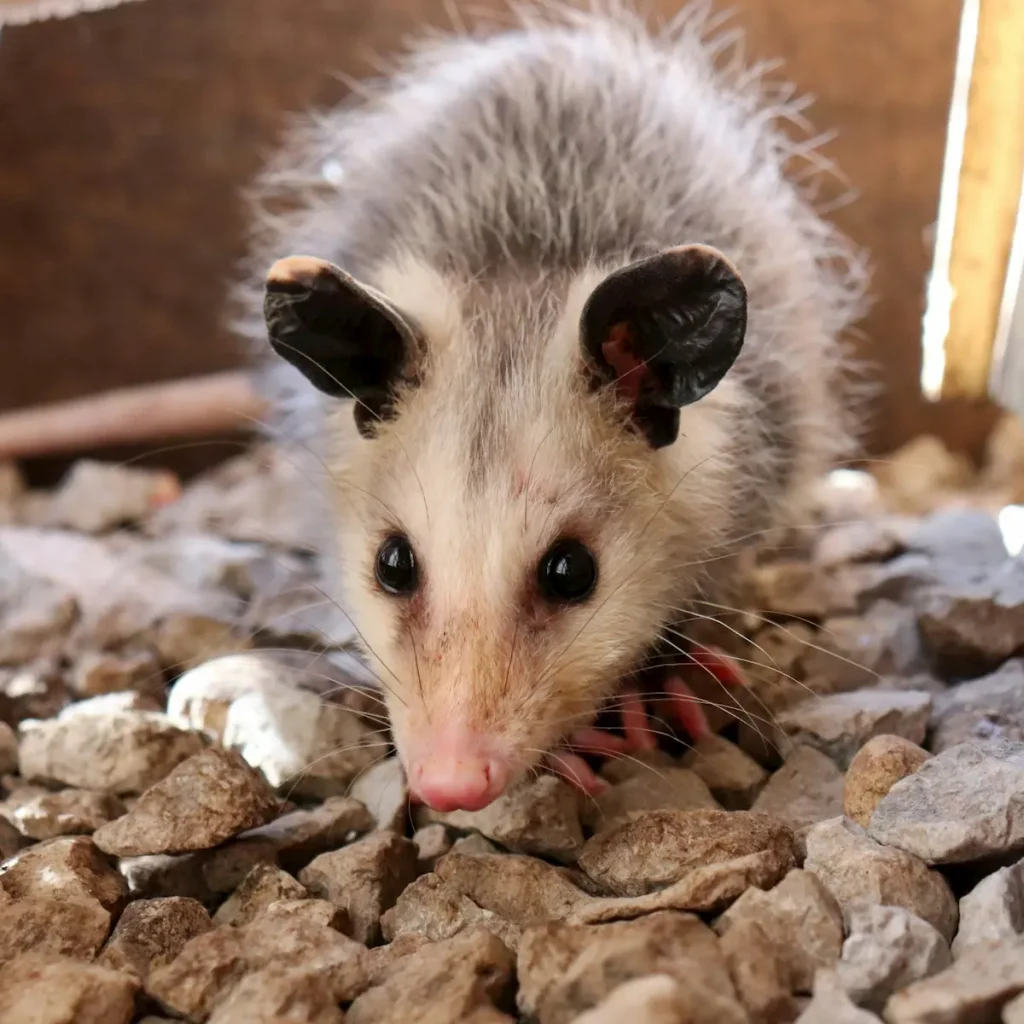
The opossum is North America’s only marsupial: cat-sized (4 to 14 pounds), greyish-white with a pointed face and a long bare tail, nocturnal and solitary. The hiss-and-drool routine is nearly all bluff — their famous move is playing dead — and their low body temperature makes rabies extremely rare in opossums. They even eat ticks by the thousands. So why call us? Because a den under your deck or shed still means accumulating droppings, a persistent smell, fleas hitching to your pets, raided trash and gardens, and an occasional wanderer through the pet door. Beneficial in the woods; a nuisance under the porch. Here’s how to tell one’s settled in.
Nighttime Sightings
A pale, cat-sized animal crossing the yard, on the fence line, or frozen in the porch light after dark. Opossums are strictly nocturnal — daytime activity is unusual and worth mentioning when you call.
Den Under the Structure
Activity, tracks, or a dug-out gap under the deck, porch, shed, or crawl space. Opossums don’t dig their own burrows — they move into ready-made spaces, which is why sealing matters.
Droppings & Odor
Large, brown, tubular droppings near the den site and a musky smell that builds the longer the animal stays. As with any wildlife waste, skip the DIY cleanup — it can carry leptospirosis.
Raided Trash & Gardens
Knocked-over cans, scattered garbage, pilfered pet food, and nibbled garden produce, night after night. Opossums are scavengers — a reliable food source is what keeps them coming back.
Pet Standoffs & Fleas
The dog barking at the same corner of the deck every night, or a sudden flea problem on outdoor pets. Opossums carry fleas and ticks, and resident dens keep reseeding them into the yard.
Cornered opossums hiss, drool, and show all fifty teeth — it’s theater, but don’t test it, and keep pets back; bites can happen and can carry disease. Hearing thumping in the attic instead of under the floor? That’s more likely raccoons. Sudden flea problem indoors? Our flea control pairs naturally with removing the source. Something else on the property? See all wildlife services →
Out humanely. Den closed. Yard uninviting.
Opossums are transient by nature — remove the animal, close the den, and cut off the food, and they have no reason to return. Skip any of those three and the next opossum finds the same setup. Here’s exactly what to expect when Titan handles it.
Free On-Site Inspection
A Titan wildlife tech confirms it’s an opossum (tracks and droppings distinguish it from raccoons and rats), locates the den, checks for young — mothers carry joeys in the pouch and on their back, which changes the handling — and maps the food sources keeping it around.
Same day or next dayHumane Trapping & Removal
Live traps placed on the animal’s actual travel paths and baited with what works, checked promptly so the animal isn’t stressed, and handled in line with Missouri Department of Conservation nuisance-wildlife rules. If there’s a mother with young, they’re kept together. Written plan and quote before any work starts.
No pressure, no obligationExclusion & Prevention
The den access gets sealed with steel mesh or hardware cloth, other under-structure gaps closed, and we walk you through what was feeding the situation: unsecured trash, outdoor pet food, fallen fruit, brush piles. Waste cleanup and sanitizing at the den site where needed.
One company, start to finishYards that attract one opossum tend to attract the next visitor too. For year-round protection from opossums, raccoons, squirrels, and more, ask about Wildlife Shield →
What people ask before they call.
Are opossums dangerous to people or pets?
Rarely. The hissing, drooling, open-mouth display is almost entirely bluff, and their more common response to a real threat is playing dead. Rabies is extremely rare in opossums thanks to their low body temperature. That said, a cornered animal can bite, they can carry leptospirosis and parasites, and dog-versus-opossum encounters end badly for somebody — so give it space, keep pets back, and let a licensed operator handle contact.
Aren’t opossums good to have around? They eat ticks.
They genuinely are useful — ticks, insects, carrion, garden pests all on the menu. The distinction is location. An opossum passing through the neighborhood at night is fine, arguably a benefit. One denning under your deck, filling the crawl space with droppings, and seeding fleas into your pets is a different situation. Removal is about ending the tenancy, not the species — which is also why the handling is humane.
How do I know it’s an opossum and not a raccoon or rat?
Sightings are the giveaway: greyish-white fur, pointed pink-nosed face, bare tail, slow deliberate walk. No sighting? Droppings help — opossum droppings are large and tubular, far bigger than a rat’s, and their tracks show a distinctive sideways “thumb” on the hind foot. Raccoons are heavier, masked, and much more likely to be in the attic than under it. The inspection settles it either way.
Can I just let it leave on its own?
Sometimes that works — opossums are transient and rarely stay anywhere long. The catch: if the den stays open and the food keeps flowing, the next opossum (or a raccoon, or a skunk) inherits the spot, and a mother with joeys will stay put much longer. If you’re seeing repeat activity, the setup is the problem, and the setup doesn’t fix itself. That’s the part we solve.
What if it has babies?
Opossum mothers carry their young — in the pouch when small, riding on her back when bigger — which is actually good news: trap the mother carefully and the family usually comes with her. Our techs check for young at the inspection and handle mothers so the family stays together. If you find seemingly orphaned joeys, don’t handle them bare-handed; call us and we’ll advise.
How do I keep opossums away for good?
Three things: no den (seal under decks, sheds, and porches with buried mesh), no buffet (secure trash lids, bring in pet food overnight, pick up fallen fruit), and no cover (clear brush piles near the house). We handle the sealing and point out the rest during the inspection. For ongoing monitoring of the whole exterior, Wildlife Shield covers it year-round. Call (314) 720-8857 and we’ll take a look for free.
Evict the tenant under the deck.
Free on-site inspection. Humane removal, exclusion, and prevention from a St. Louis wildlife tech who’s handled yards just like yours. Phones answered 24/7.