
St. LouisSquirrelRemoval
Scratching in the ceiling at dawn. Skittering over your head in the soffits. Squirrels in the yard are fine — squirrels in the attic are chewing, and what they chew includes wiring. Locally owned, backed by 35+ years of hands-on wildlife experience in St. Louis homes. We trap and remove squirrels humanely, seal every entry point, and repair the damage. One call, and we’re on it today or tomorrow whenever we can.
Book a Free Inspection
Animal in the attic right now? Calling is fastest — phones answered 24/7. Otherwise pick a time and we’ll confirm within an hour during business hours.
Cute in the yard.Costly in the attic.
Squirrels are rodents — slim bodies, bushy tails, fur from gray to reddish-brown to black — and like all rodents, their front teeth never stop growing, so they never stop chewing. Outside that means tree bark and the occasional phone line. Inside your attic it means wiring, drywall, insulation, and soffits. They prefer trees, but when St. Louis temperatures drop they move into warm structures, and fall and late winter are when attics fill up. A squirrel or two in the yard is nothing; the signs below mean they’ve moved in.
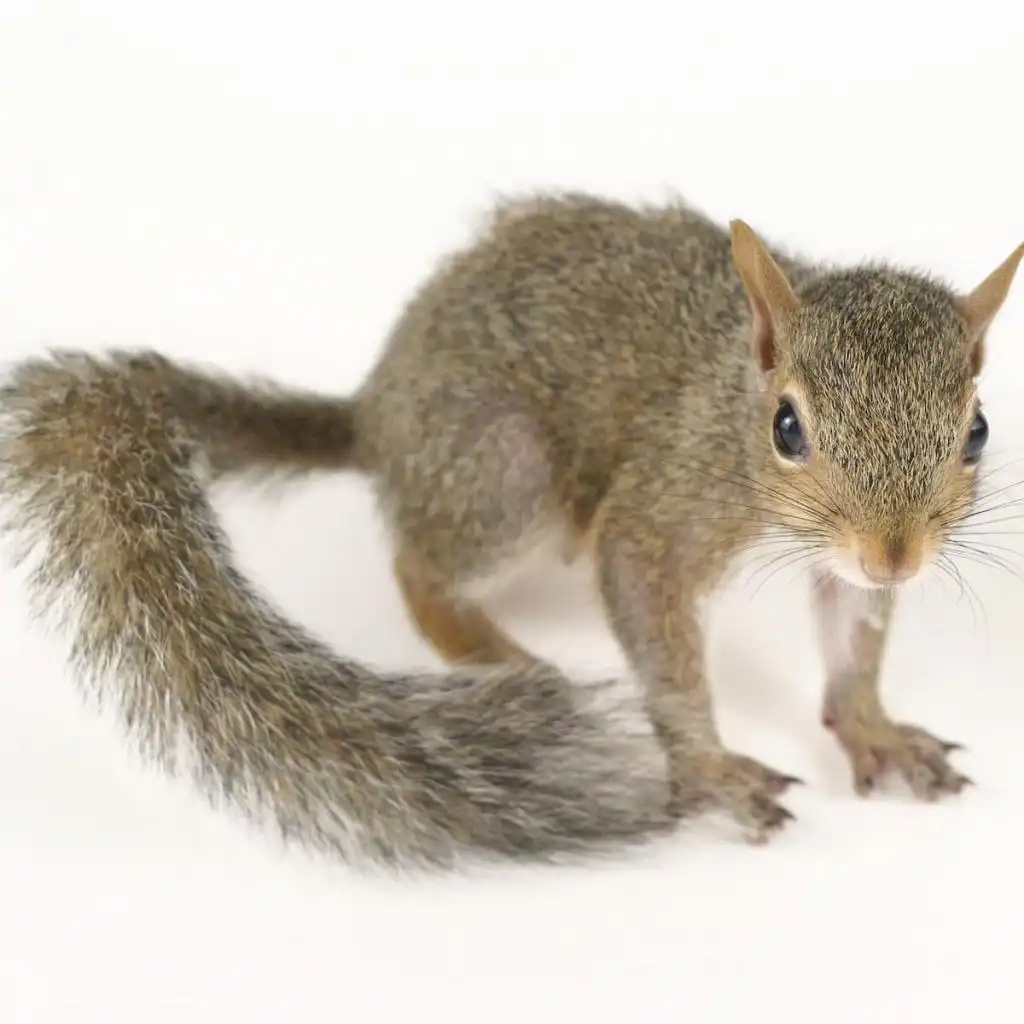
Scurrying at Dawn & Dusk
Fast, light skittering and scratching overhead, heaviest in the early morning and around sunset. That daytime schedule is what separates squirrels from raccoons (heavy, at night) and mice (faint, at night).
Chewed Entry Points
Gnawed holes at rooflines, fascia boards, gable vents, and soffit corners — often golf-ball to baseball sized. Fresh chew marks show pale, clean wood.
Droppings & Odor
Small dark droppings along attic runways plus a musky or ammonia smell that builds over time. Don’t handle waste yourself — cleanup and disinfection are part of our job.
Nests & Shredded Insulation
Balled-up nests of leaves, twigs, and shredded insulation tucked into attic corners and eaves. Flattened insulation runways show their traffic patterns.
Roofline Traffic
Squirrels running the same route along your roof, gutter line, or an overhanging branch, then disappearing at the same spot. That spot is the front door.
Squirrels aren’t considered dangerous, though like any wild animal they can bite if cornered — if that happens, see a doctor promptly. Hearing heavy thumps at night instead of daytime skittering? That points to raccoons. Faint scratching in the walls? More likely mice. Something else on the property? See all wildlife services →
Out humanely. Sealed properly. Repaired fully.
Every squirrel situation is a little different — species, season, entry points, whether there’s a litter in the nest — so the plan starts with an inspection, not a one-size trap. Here’s exactly what to expect when Titan handles it.
Free On-Site Inspection
A Titan wildlife tech inspects the attic, roof, and exterior: confirms it’s squirrels, finds how they’re getting in, checks the nest for young, and assesses the chewing damage — with special attention to wiring, since gnawed wires are a fire risk worth catching early.
Same day or next dayHumane Trapping & Removal
Trapping set up for your specific situation and placed on the active routes, with the animals handled humanely and in line with Missouri wildlife regulations. If there’s a litter, removal is sequenced so the family stays together. Written plan and quote before any work starts.
No pressure, no obligationExclusion, Sanitation & Repair
Every entry point sealed and reinforced — squirrels chew back into unsealed attics, so exclusion is the difference between solved and paused. Then contaminated areas are cleaned and disinfected, and chewed materials and entry damage repaired.
One company, start to finishAttic in rough shape? Attic restoration covers deep cleanup, decontamination, and insulation replacement. For year-round protection from squirrels, raccoons, bats, and more, ask about Wildlife Shield →
What people ask before they call.
How do I know it’s squirrels and not mice or raccoons?
Timing and weight. Squirrels are active in daylight — fast skittering at dawn and dusk. Mice are a faint nighttime scratching; raccoons are slow, heavy nighttime footsteps. Chewed openings at the roofline the size of a golf ball or bigger also point squirrel. The inspection settles it either way.
Are squirrels actually a serious problem?
The animal isn’t the risk — the chewing is. Rodent teeth grow continuously, so squirrels gnaw constantly, and exposed wiring in an attic is a genuine fire hazard. Add shredded insulation, damaged soffits, and accumulating waste, and a “cute” problem gets expensive the longer it runs. Handled early, it’s a straightforward job.
Can’t I just block the hole when they leave?
Risky in both directions. Seal while an animal is inside and it will chew a new hole to get out — or die in a wall void, which is a worse problem. Seal while a litter is in the nest and the mother will tear her way back in. Proper exclusion confirms the attic is empty (or uses one-way doors at the right time of year) before anything gets sealed. That sequencing is most of the skill.
Is the removal humane?
Yes. Humane trapping, respectful handling, and compliance with Missouri Department of Conservation nuisance-wildlife rules. When there’s a litter, we keep mother and young together. Squirrels aren’t villains — they just picked the wrong place to nest, and getting them out doesn’t require treating them badly.
When do squirrels get into attics?
The two big waves in St. Louis are fall, when they’re stashing food and looking for winter shelter, and late winter into spring, when females nest. Squirrels have two litters a year in this area, so a springtime attic squirrel very often means babies are present or imminent — one more reason to get it inspected rather than guessed at.
Will they come back after removal?
An unsealed attic is an open invitation — if not to the same squirrel, then to the next one that finds the hole. That’s why exclusion and repair are built into the job: entry points sealed and reinforced, vulnerable spots hardened, and overhanging access trimmed back where we can flag it. For ongoing protection, Wildlife Shield keeps the whole exterior monitored year-round. Call (314) 720-8857 and we’ll take a look for free.
Quiet mornings again.
Free on-site inspection. Humane removal, exclusion, and repair from a St. Louis wildlife tech who’s cleared hundreds of attics just like yours. Phones answered 24/7.