
St. LouisSnakeRemoval
A snake in the basement, coiled by the pool, or crossing the garage floor — nobody wants to guess whether it’s a harmless rat snake or a copperhead. Don’t approach it, don’t try to move it, and don’t kill it (most Missouri snakes are protected by law). Just call. Locally owned, backed by 35+ years of hands-on wildlife experience in St. Louis. We identify it, remove it humanely, and figure out why it picked your property. Phones answered 24/7.
Book a Free Inspection
Snake in the house right now? Calling is fastest — keep an eye on it from a distance if you can. Otherwise pick a time and we’ll confirm within an hour during business hours.
Nearly 50 species.Five venomous.
Missouri is home to nearly 50 species and subspecies of snakes, so meeting one eventually is close to a certainty. The overwhelming majority — garter snakes, rat snakes, water snakes, and the rest — are harmless, and even the shy ones only bite in self-defense. Just five Missouri species are venomous: the Osage copperhead, western cottonmouth, timber rattlesnake, eastern massasauga, and western pygmy rattlesnake. In St. Louis yards, the copperhead is the one that matters — the others are rare in the metro. Missouri law protects snakes, so the answer to any of them is identification and removal, not a shovel. Here’s the comparison worth knowing.
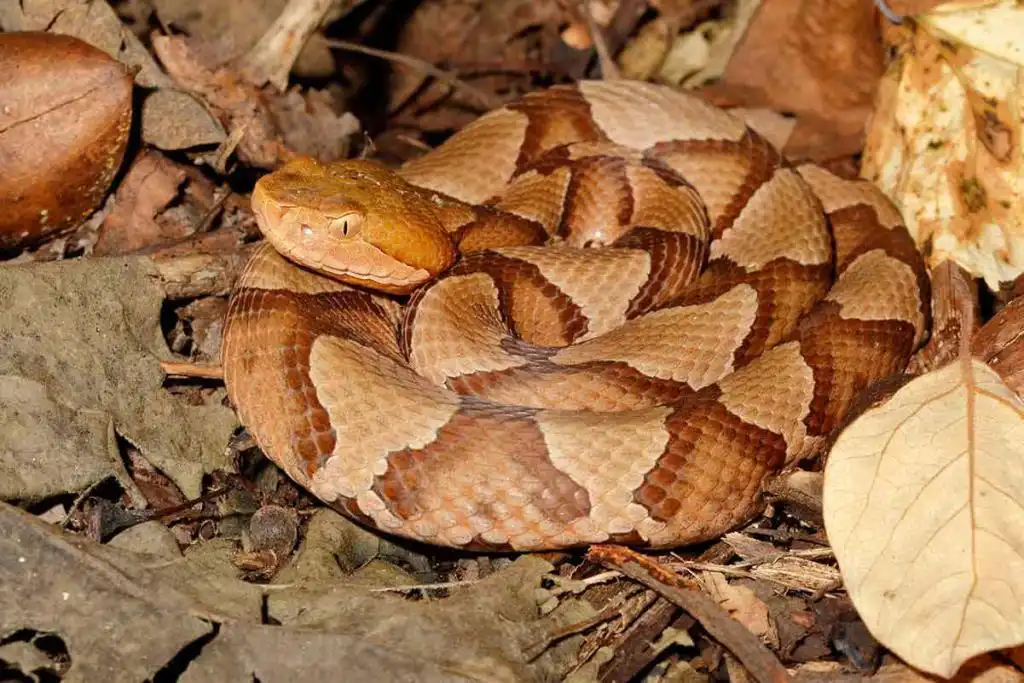
Copperhead — Venomous
Copper-tan with hourglass-shaped crossbands, thick body, roughly 2-3 feet. The only venomous snake commonly found in St. Louis County. Relies on camouflage — most bites happen when one is stepped on or grabbed. Keep people and pets well clear and call.
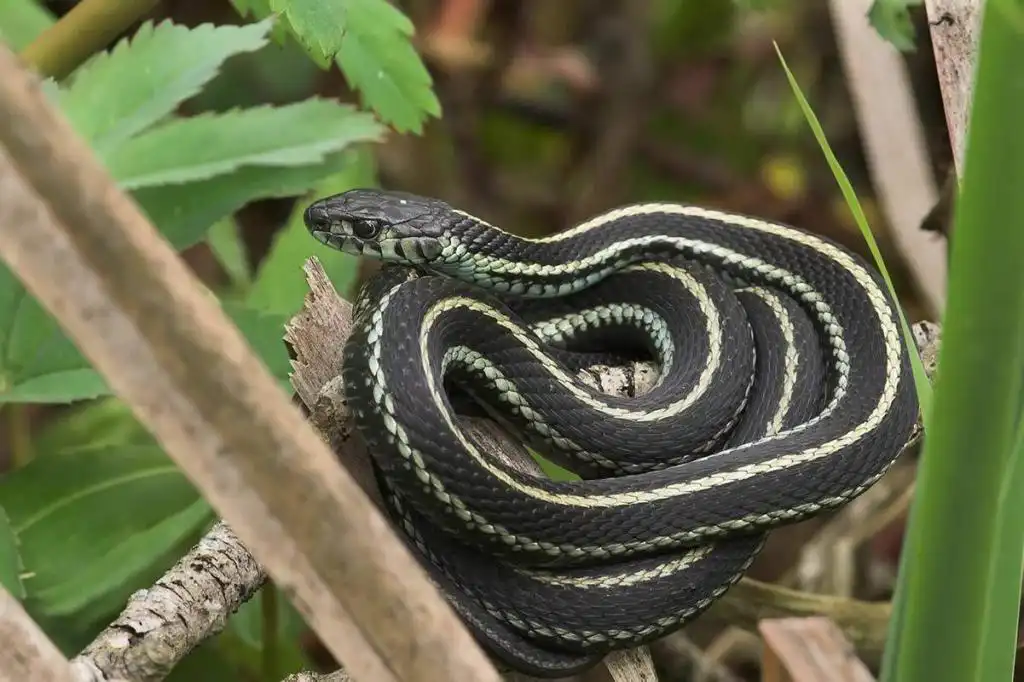
Garter Snake — Harmless
Slender with lengthwise yellow stripes, common in gardens and yards. Eats insects, worms, and small pests. Typical of what most St. Louis homeowners actually encounter — startling, but not a threat to people or pets.
The honest rule: unless you’re certain, treat it as unknown and keep your distance — never try to handle, corner, or kill a snake, and if anyone is bitten by a venomous (or unidentified) snake, seek medical care immediately. One more thing worth knowing: snakes go where the food is, and repeat snake sightings often point to a mouse or rat population on the property. Something else out there? See all wildlife services →
Identified, removed, and reason found.
A single passing snake is a moment; a snake living under the porch is a habitat decision — food, cover, and shelter all checked out on your property. Removing the animal without fixing the habitat is a temporary fix. Here’s exactly what to expect when Titan handles it.
Removal & Identification
For an active sighting — in the house, garage, pool, or yard — a Titan wildlife tech comes out, identifies the species, and removes the snake safely and humanely, in line with Missouri Department of Conservation rules. For venomous snakes, keep everyone and every pet inside until we arrive.
Same day whenever possibleFree Property Inspection
Then we figure out the why: rodent activity (a snake’s main food source), cover like woodpiles and dense ground vegetation, and shelter such as gaps under porches, sheds, and foundations. Most snakes we remove live on the property — the inspection finds what’s hosting them. Written findings and quote, no obligation.
Honest answers, plain languageExclusion & Habitat Fixes
Foundation and under-structure gaps sealed, snake-friendly cover flagged for cleanup, and — where rodents are the draw — pest-side treatment to remove the food supply. Snake trapping is available for properties with recurring activity.
One company, both sides of the problemThis is where pest and wildlife under one roof pays off: the snake is wildlife, but the reason it’s there is usually rodents. For year-round monitoring of both, ask about Wildlife Shield →
What people ask before they call.
There’s a snake in my house right now. What do I do?
Don’t try to catch it or chase it — that’s how bites happen, and cornered snakes hide in places you can’t reach. If it’s in one room, close the door and put a towel along the gap. Keep kids and pets away, note where you last saw it, and call (314) 720-8857. If you can safely watch it from a distance until we arrive, even better.
How do I know if it’s venomous?
In St. Louis, the practical question is “is it a copperhead?” — look for the copper-tan color and dark hourglass bands. But identification from a distance is genuinely hard, several harmless species mimic venomous ones, and juveniles look different from adults. So the working rule is simple: don’t gamble. Keep clear, snap a photo from a safe distance if you can, and let us make the ID. That’s free.
Can’t I just kill it?
Missouri law protects snakes — they’re covered under the state’s Wildlife Code, and killing them is illegal except in narrow circumstances. Beyond the legal issue, most snakebite injuries happen to people attempting to kill or handle a snake, and the snake you kill gets replaced by the next one if the habitat stays attractive. Humane removal plus habitat fixes is the version that’s legal, safer, and actually lasts.
Why do I keep seeing snakes on my property?
Snakes follow food and cover. Repeat sightings usually mean the property offers both: a mouse or rat population to hunt, and shelter like woodpiles, tall ground cover, rock walls, or gaps under structures. That’s actually useful information — a snake is often the first visible symptom of a rodent problem you hadn’t spotted yet. The inspection checks both.
Are snakes dangerous to my pets?
Dogs and cats investigate with their noses, which puts them at more risk than people. Bites from harmless species are minor; a copperhead bite needs a vet immediately. If a snake has taken up residence where pets roam — under the deck, in the garden, near the pool — that’s a good reason to have it removed rather than waiting for the encounter. If your pet is bitten, go to the vet first and call us second.
What if a person gets bitten?
For any bite from a venomous or unidentified snake: seek medical care immediately — call 911 for serious symptoms — keep the person calm and still, and remove tight jewelry or clothing near the bite. Skip the folk remedies: no cutting, no suction, no ice, no tourniquet. Missouri sees very few serious snakebites a year and fatalities are extremely rare, but prompt medical care is what keeps it that way. The snake can be dealt with after the person is.
Stop guessing what it was.
Free on-site inspection. Humane removal and honest identification from a St. Louis wildlife tech who knows every snake in the county. Phones answered 24/7.