
St. LouisWasp & HornetRemoval
A nest under the eave. Yellow jackets crashing every cookout. Unlike bees, wasps can sting repeatedly, and they defend their nests aggressively, so this isn’t a ladder-and-spray-can job. Locally owned, backed by 35+ years of hands-on experience in St. Louis yards. One call sets up a free on-site inspection, and nest removal is included in our Home Shield plan.
Book a Free Inspection
Pick a time that works. We’ll call to confirm within an hour during business hours.
Wasp or hornet?Here’s the lineup.
The terms get used interchangeably, but here’s the short version: every hornet is a wasp, not every wasp is a hornet. Hornets are larger, build globe-shaped paper nests up high, and defend them hard. Smaller wasps like yellow jackets and paper wasps nest everywhere from the ground to your eaves, and yellow jackets are the ones raiding your soda can. Knowing which species you have determines how the nest gets handled, and it’s the first thing our tech identifies on inspection. These are the four you’re most likely to meet in a St. Louis yard.
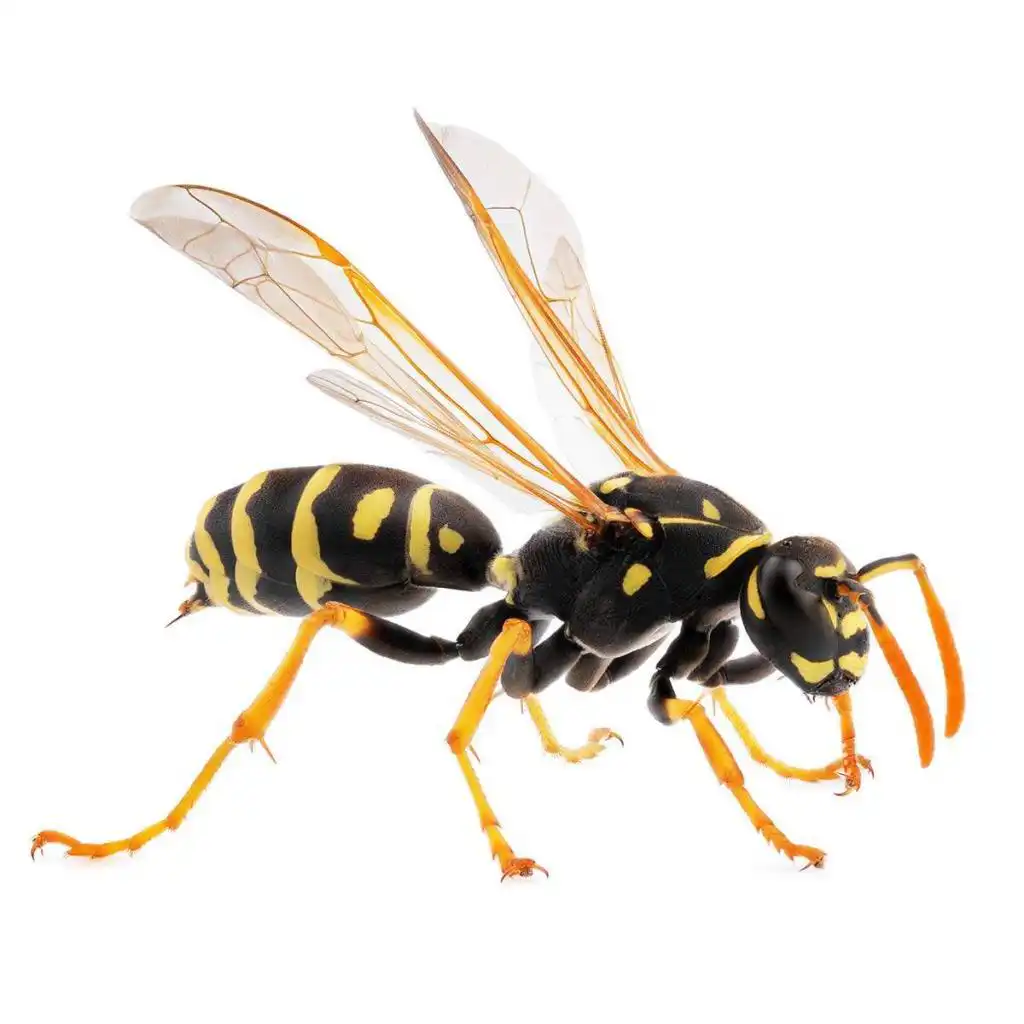
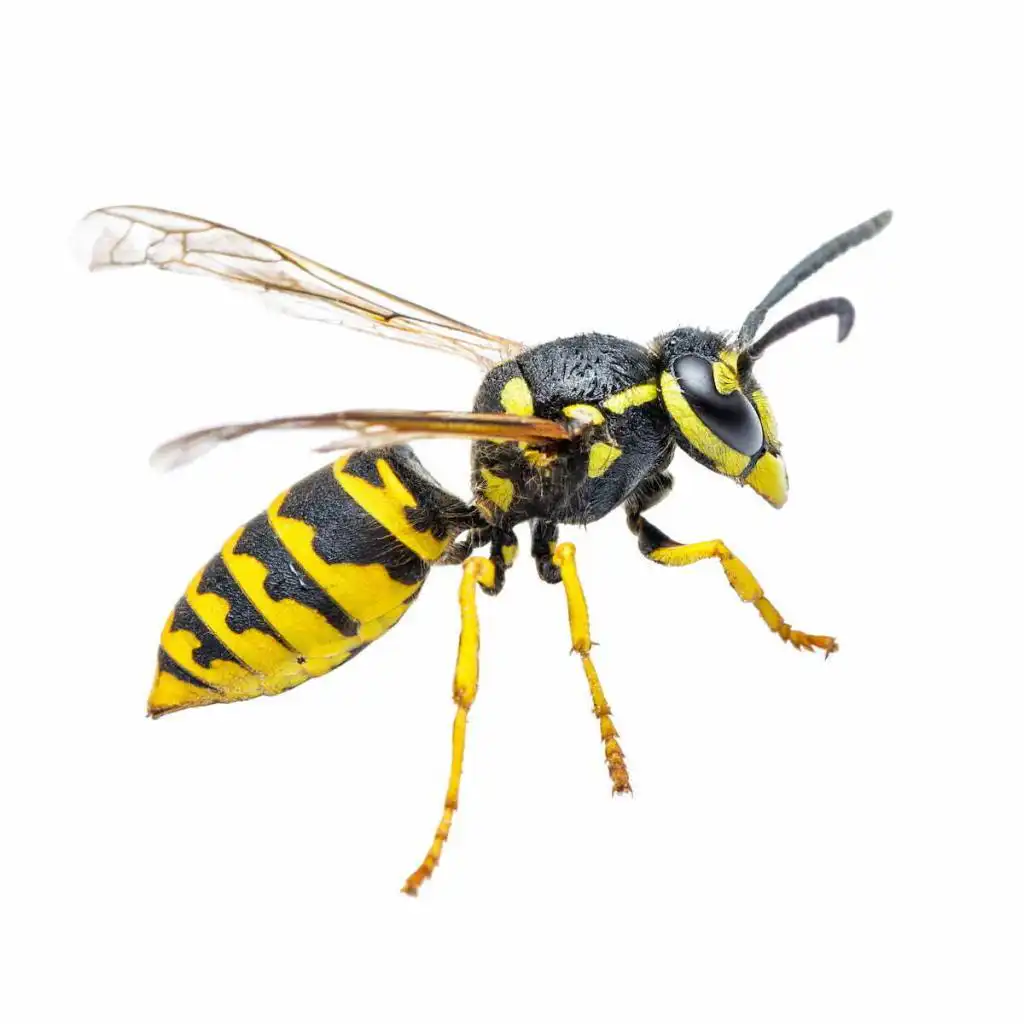
Yellow Jacket
Black and yellow, big colonies, nests in the ground or up in eaves. Drawn to sweet food, which is why they crash cookouts. The most aggressive wasp on this list.
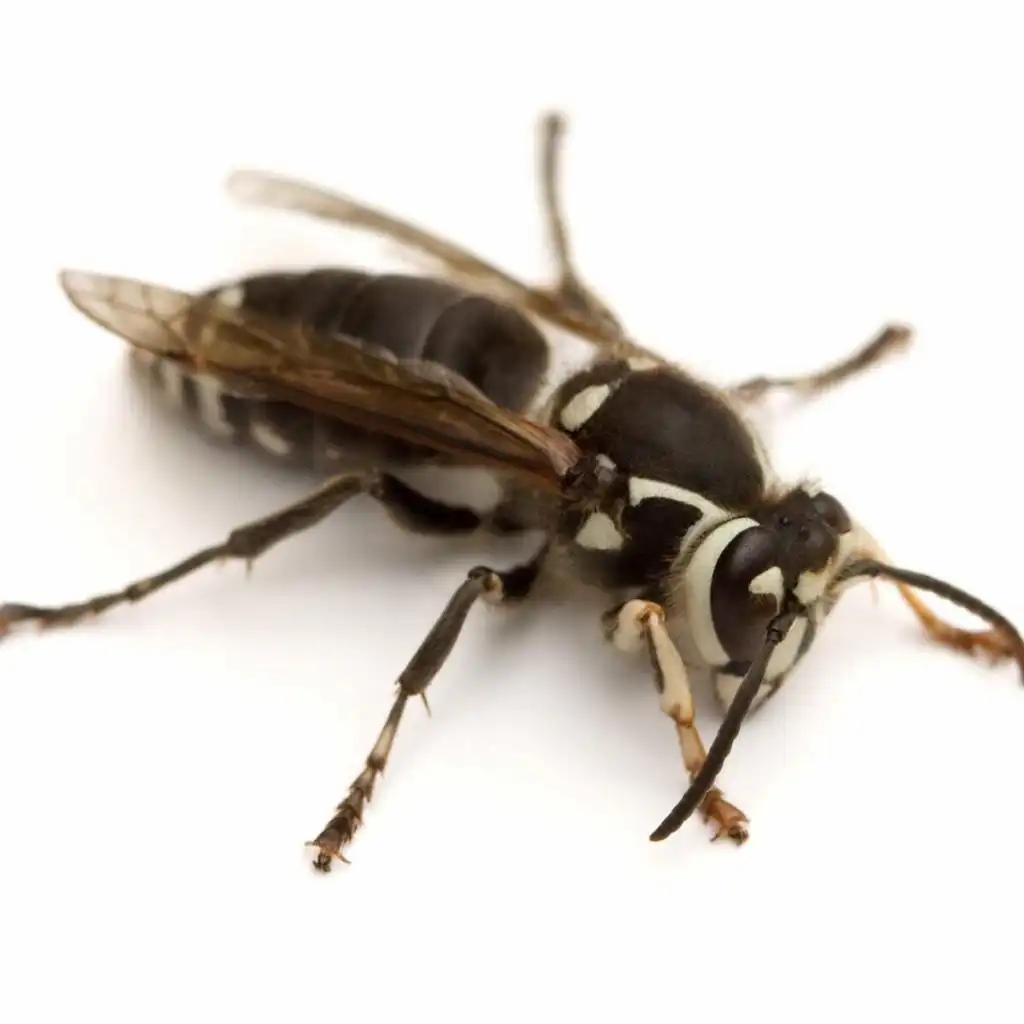
Bald-Faced Hornet
Black and white, builds the classic globe-shaped paper nest above ground, often in trees or on structures. Defends the nest aggressively — keep your distance.
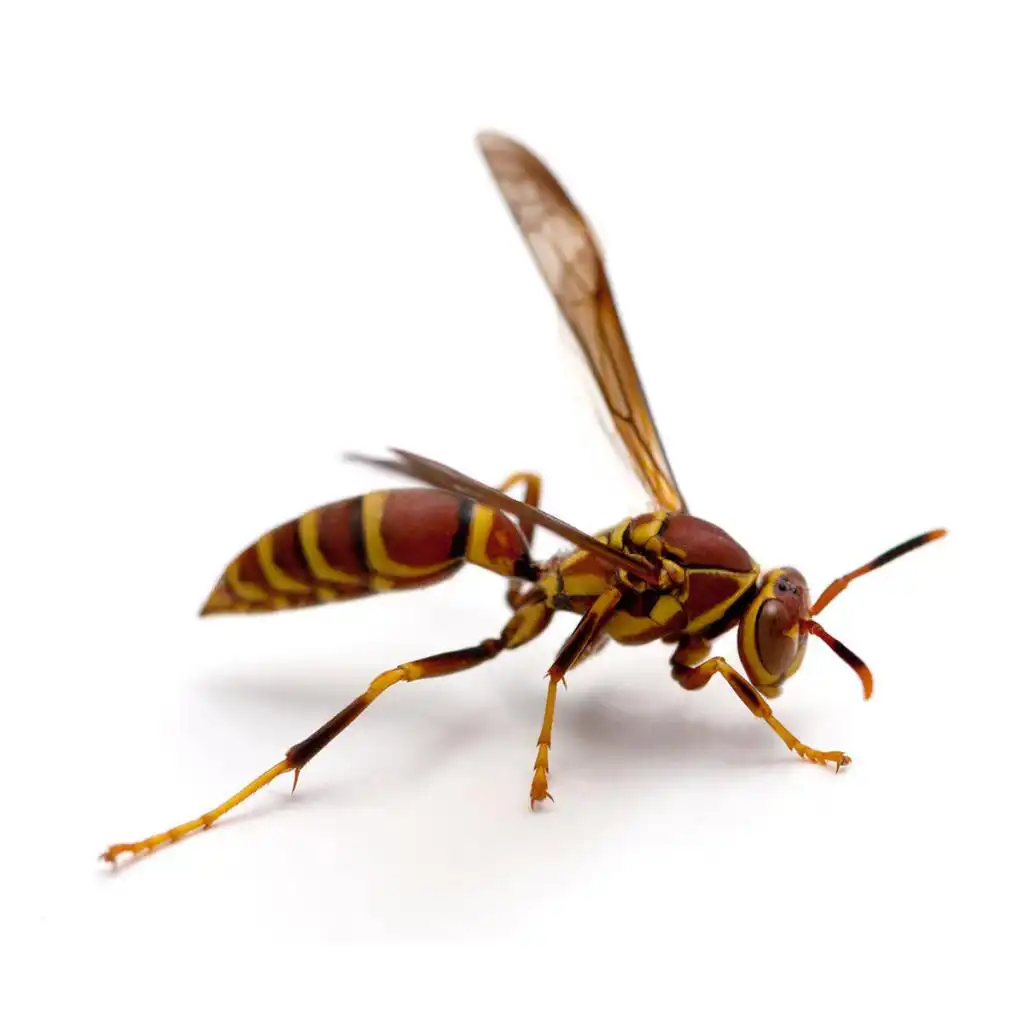
Paper Wasp
Small and brown with yellow markings, builds open, umbrella-shaped paper nests under soffits and eaves. Less aggressive — usually only stings when the nest is threatened.
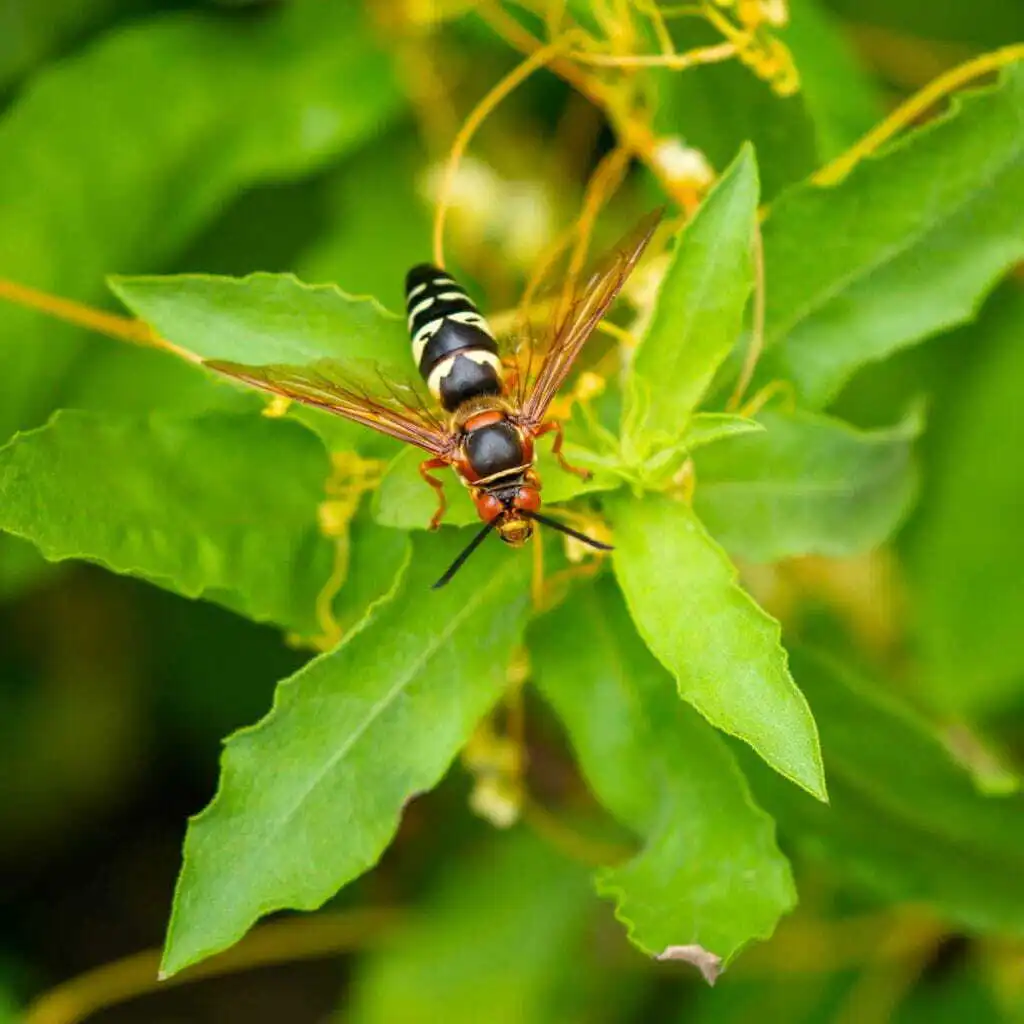
Cicada Killer
Big and intimidating-looking, but the most docile of the group. Burrows in the ground, black abdomen with pale yellow bands. Scary name, mild temperament.
Leave the ladder in the garage.
A wasp can sting repeatedly, a disturbed nest defends itself as a group, and for anyone with a sting allergy the stakes are higher still. Knocking down a nest yourself is genuinely risky. Here’s exactly what to expect when Titan handles it instead.
Free On-Site Inspection
A licensed Titan tech identifies the species, locates the nest (and any you haven’t spotted — under soffits, in fixtures, in the ground, sometimes working into attics), and gauges the risk. Lots of wasps in one area almost always means a nest is close by.
Same day or next dayWritten Plan + Quote
We tell you what species you’re dealing with, where the nests are, and what removal involves, in plain language with a written quote. No pressure, no obligation.
On the spotRemove & Prevent
Safe nest removal with the right protective equipment, treatments applied per label directions, and prevention guidance so the same spots don’t get rebuilt on next season. Nest removal is included in our recurring Home Shield plan.
Season-long protection availableWasp and bee nest removal is included in Home Shield, and hornets and carpenter bees are covered under Premium. View all service plans →
What people ask before they call.
How do I know if I actually have a nest, or just passing wasps?
One wasp cruising through the yard is nothing. The signs of a nest nearby: repeated activity concentrated around one spot (a soffit corner, a hole in the ground, a shrub), a visible paper or mud nest, or wasps trailing in and out of a gap in siding or a vent. If you’re seeing numbers, a nest is almost certainly close.
Can I just knock the nest down myself?
We’d strongly advise against it. Wasps sting repeatedly (unlike bees), the colony defends the nest as a group, and most DIY attempts happen on a ladder — a bad combination. Store spray also rarely reaches ground nests or nests inside wall voids. If anyone in your household is allergic to stings, don’t go near it at all. Call us instead: (314) 720-8857.
Are wasp stings dangerous?
For most people a sting means sharp pain, swelling, and irritation for a few days. For people with sting allergies, reactions can be serious and need immediate medical attention. Because a wasp can sting multiple times and a disturbed colony attacks together, a nest near a door, deck, or play area is worth taking seriously even if nobody’s been stung yet.
When are wasps and hornets most active in St. Louis?
Queens start new nests in spring, colonies grow through summer, and late summer into early fall is peak size and peak aggression — that’s when yellow jacket problems spike. Getting a nest handled early in the season means dealing with dozens of insects instead of hundreds.
What about honey bees?
Honey bees get handled differently than wasps and hornets, so tell us if you think that’s what you have — clues include fuzzy bodies and steady traffic to one opening. Species ID is part of the free inspection, and our tech will walk you through the right options for what’s actually there.
Will they just come back next year?
Old nests don’t get reused, but attractive spots do — the same sheltered eave or soffit gap gets rebuilt on by new queens. If you’ve had wasps before, odds are good you’ll see them again. That’s why removal comes with prevention guidance, and why nest removal is built into our recurring Home Shield plan so it’s handled every season, not re-fought every season.
Take back the backyard.
Free on-site inspection. No obligation. Real answers from a St. Louis tech who’s removed nests from eaves, attics, and yards just like yours.